One evolving setup
Keeps one main Loopy Pro template instead of separate projects for every song, folding useful song-specific tools back into the master rig.
Artist Spotlight
Kristóf uses Loopy Pro as the center of a high-energy live electronic setup built for beatbox, synths, guitar, vocals, drops, fills, resampling, and improvisation.
Quick Glance
High-energy live electronic rig for beatbox, synths, guitar, vocals, drops, fills, resampling, and improvisation.
Jazz, dubstep, drum and bass, bass music, beatbox, guitar, synths, vocals, and live electronic performance.
Loopy Pro on iPad with MOTU M4, Korg Modwave, microphone, guitar input, one-shot drums, AUv3 effects, slicers, resampling, and custom actions.
Loopers, beatboxers, producers, electronic performers, and solo artists who want a flexible rig that can move like a DJ set while still feeling played.
Watch The Interview
Performance Clip
Kristóf started looping almost by accident. After his high school band split, he found himself alone at rehearsal with a small DigiTech looper and a guitar. The device only gave him around 15 seconds on one channel, but it opened a door: chords, solos, practice ideas, and the first glimpse of how a solo musician could build something bigger in real time.
That curiosity grew through the Ditto looper, the RC-505, beatbox battles, busking, and years of learning by doing. Dub FX was an early inspiration because the performance felt like a complete song being built by one person in front of you.
“When I have an idea, I can just do it.”
Before Loopy Pro, Kristóf was already deep into hardware looping. He used the RC-505 MK1, then became one of the early artists to work with the RC-505 MK2 through the 2021 Kickback Battle. The MK2 was an upgrade, but it still left him imagining a more modular, touchscreen, effects-heavy performance system.
The first time he saw Loopy Pro was through Dub FX, who showed him an early beta on an iPhone. For Kristóf, the idea clicked immediately. He could choose his own effects, build his own layout, and keep expanding the setup whenever a new performance idea appeared.
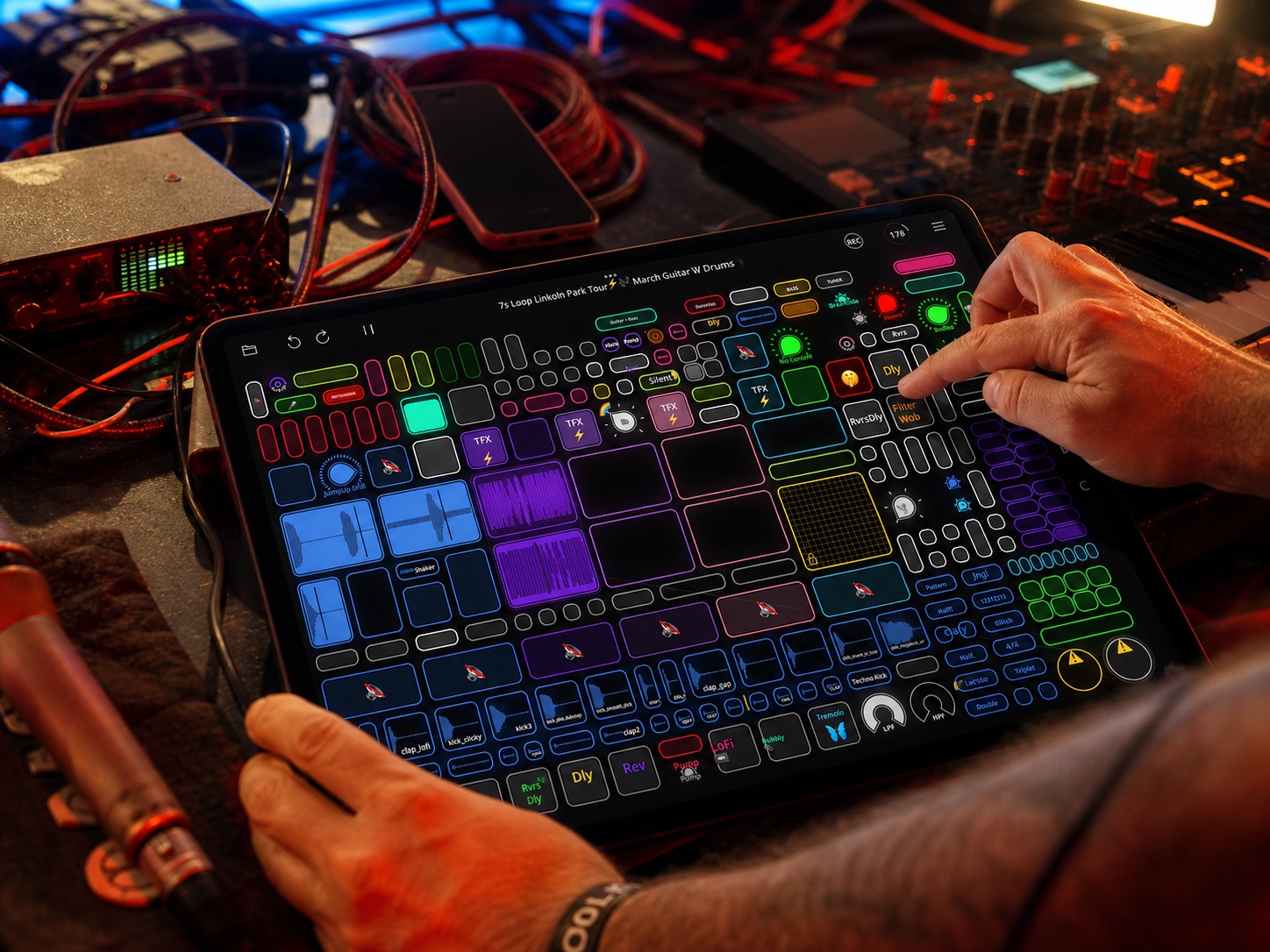
Kristóf does not build a separate Loopy Pro project for every song. He uses one evolving “monster template” that collects useful ideas from writing, rehearsing, and playing live.
If a song needs a specific Looperator preset, a new transition, or a dedicated action, he folds it back into the main template. The next time he improvises, those same tools are available in a completely different musical situation. It suits the way he performs: closer to a continuous DJ-style set than a stop-start concert with applause between songs.
The rig looks complex so it can feel simple on stage. Colors group the core parts: drums, bass, harmony, melody, leads, resampling, and effects. Buttons can behave differently depending on whether they are tapped, double-tapped, long-pressed, or swiped. Instead of memorizing a maze of hardware shortcuts, Kristóf builds the actions into the instrument itself.
“It looks complicated for it to be easy.”
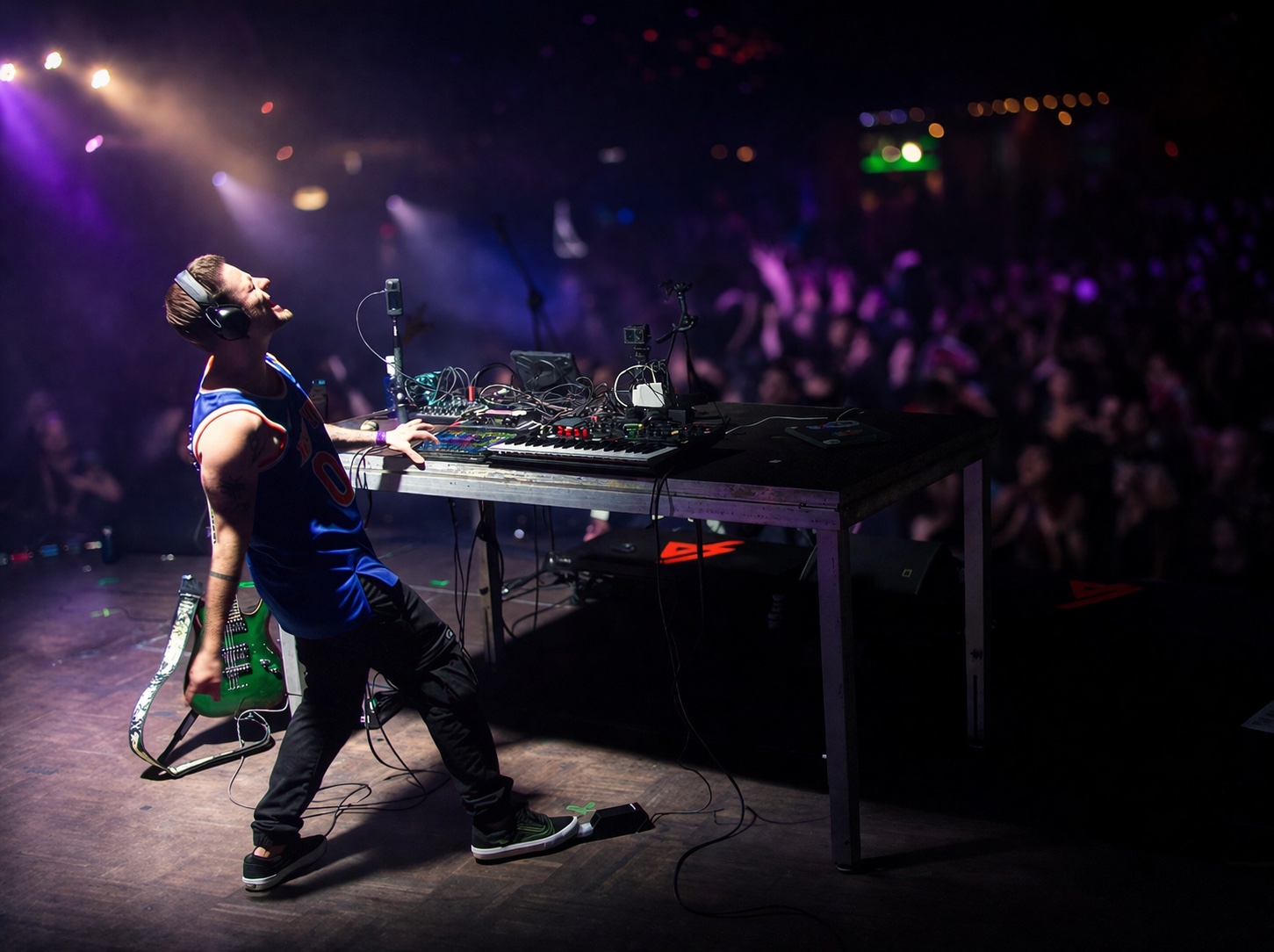
A central idea in Kristóf’s setup is that a loop should keep moving. Loopy Pro lets him add life inside and around the loop: fills at the end of bars, risers, beat repeats, reverse delays, granular effects, slicers, resampled sections, and one-button effect chains.
For drums, he combines live interaction with prepared material where it serves the performance. Tight top loops and processed breaks can sit alongside live beatbox, one-shots, fills, and manual slicing. He is building an electronic set that can compete with the sound and impact of DJ music while keeping the risk, interaction, and energy of a live player, so the audience feels that the set is being performed now.
That live energy matters. A live player can push, recover, react, change direction, and make something happen in the room.
“Loopy enabled me to make the loop not just a loop.”
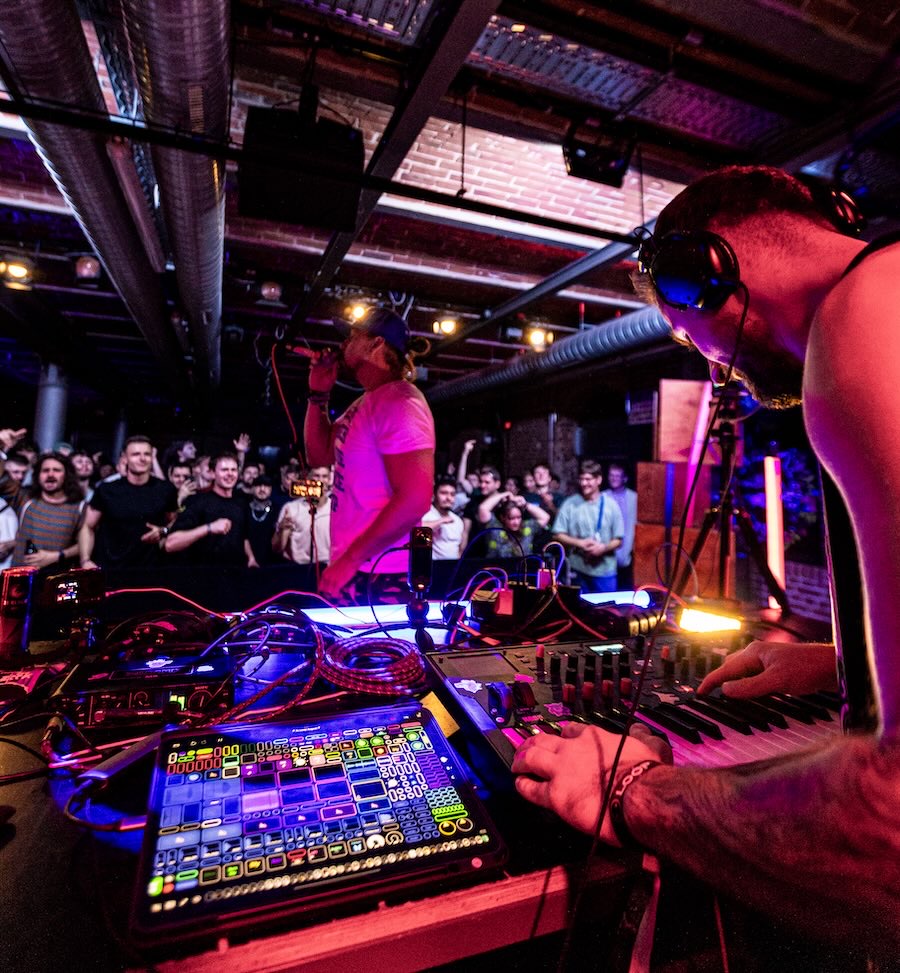
Kristóf’s current setup is much leaner than earlier versions. He used to travel with a large hardware table including an RC-505 MK2, Korg Modwave, Line 6 Helix, Kaoss Pad, Roland MX-1, condenser microphone, and phantom power gear. International shows made the weight and setup time impossible to ignore.
Now the core rig is more portable: iPad, Loopy Pro, MOTU M4, Korg Modwave, microphone, and guitar. Guitar and vocal processing that once lived in hardware can now happen with AUv3 effects inside the iPad. Favorite plugins include Looperator, FabFilter Pro-Q 3, and Knock Clipper.
That smaller rig still gives him huge control. He can run track-effect style routing, mix-bus delay, reverse reverb, filters, slicers, bass resampling, acapella playback, and custom multi-effect buttons without carrying a full table of gear.
Kristóf’s album Shocked was shaped partly by the same live process. Some ideas began as improvisations, live set moments, or Loopy Pro jams, then moved into Ableton for production. The middle-section vocal glitches in “Mantra,” for example, came from playing with an acapella inside Loopy Pro and finding a texture worth rebuilding in the final track.
He records many of his gigs and sometimes searches back through them for sparks: a crowd reaction, a transition that worked, or a musical idea that surprised him. That live testing gives the music a different kind of confidence.
It also changed how he handles mistakes. In one major Barcelona show, the sound cut out mid-set. Instead of panicking, he restarted the rig, saw the system come back online, and turned the recovery into a beatbox re-entry. The setup matters, but the performer is still driving.
“One button can do so many actions.”
The interview shows how Kristóf turns Loopy Pro into a live electronic performance instrument rather than a fixed loop station.
Keeps one main Loopy Pro template instead of separate projects for every song, folding useful song-specific tools back into the master rig.
Maps tap, double tap, long press, and swipe gestures so a loop can record, overdub, reverse, remove overdubs, or trigger related actions.
Resamples multiple musical groups into a new loop, stops the source loops, and lets him slice the combined result live for freestyle arrangement control.
Replaces a heavier hardware table with iPad, Loopy Pro, MOTU M4, Korg Modwave, microphone, guitar, and AUv3 processing.