A human reason to trust the app
Loopy Pro comes from a developer who is reachable, invested, and visibly serious about not breaking people's work.
The Story Behind Loopy Pro
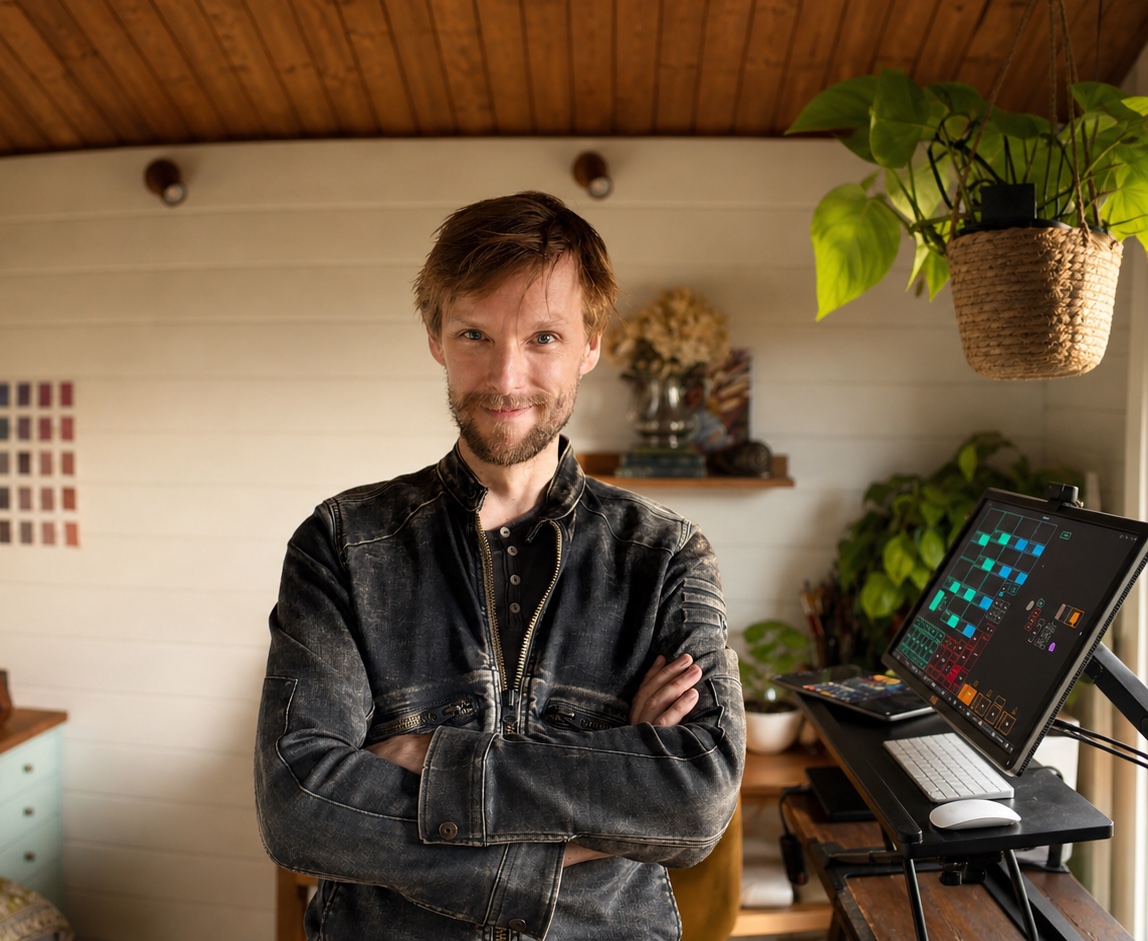
Loopy Pro artist Inby sits down with Michael Tyson, the creator and developer of Loopy Pro, to trace the unusual path from a first iPhone looping experiment to the deeply flexible music system it has become.
Quick Glance
Loopy began as an iPhone experiment after Michael saw Imogen Heap live looping and wanted to understand what was possible.
The app grew through years of conversations with musicians who kept finding new ways they wanted a looper to work.
Loopy Pro is still developed in close contact with users, beta testers, artists, and Edward Spiegel on QA and support.
The same custom engine that makes Loopy Pro feel different on iPad is also what makes desktop and wider platform plans possible.
Loopy Pro works the way it does because it has always been built close to the people using it. This interview traces the product decisions behind that: a lifelong habit of making tools, years of independent audio development, Audiobus, community feedback, and the seven-year road to Loopy Pro.
Michael started programming as a child on an Apple IIe, mostly by experimenting and seeing what the machine could do. That way of working still shows up in the app: build the thing, test it in the world, listen closely, then keep refining.
Loopy began after Michael saw Imogen Heap live looping on YouTube, right around the moment the App Store opened up to native apps that could do serious audio work. The first version was an experiment. The useful parts came later, as musicians started asking for the things they actually needed.
I just love making tools.
Before Loopy became a serious business, Michael built The Cartographer, an offline mapping app made for real travel constraints: limited data, unfamiliar cities, and the need to make a phone useful without a constant connection. It was featured by Apple and made independent app development feel possible.
It also taught a hard lesson about platform dependence when Google retired the API it relied on. Michael kept it alive for a while with an improvised workaround, then found himself pulled back toward audio, where the problems felt deeper and more interesting.
That return became Loopy HD. Dub FX helped the launch by making an early performance video with it. Later, Loopy HD found its way onto The Tonight Show when an engineer who already used the app suggested it for a Jimmy Fallon performance. The clip went viral, and Loopy became part of the wider live-looping conversation.
Loopy HD also helped create the conditions for Audiobus, which Michael co-created with another independent developer. Before iOS had a mature plugin system for music apps, musicians kept asking why they could not run a synth, guitar amp, or effect app into Loopy and record the processed sound. At the time, iOS music apps were mostly separate islands. Audiobus gave those apps a way to connect, so musicians could build chains of instruments, effects, loopers, and recorders.
For a while, Audiobus made iOS music feel more like a studio. Big developers adopted it. GarageBand supported it. Then Apple introduced Inter-App Audio and closed the system Audiobus had relied on, giving the project a year to rebuild on the new foundation. The technical details are less important than the pattern: when the platform shifted, Michael rebuilt the bridge so musicians could keep working.
The interview is unusually candid about one of Loopy Pro's central facts: Michael is not primarily a live looper. He uses Loopy Pro constantly as a developer, while the app's musical intelligence comes from listening to people who perform with it. Early users asked for things Loopy HD could not easily do. Those requests accumulated into a large private document of ideas, frustrations, edge cases, and possible futures.
Eventually the question became architectural. How do you say yes to wildly different workflows without turning the app into a cluttered pile of special cases? Loopy Pro's action system was the answer: a way to add depth and customization without adding a new visible button for every idea. A musician can build a page, map gestures, tie controls to hardware, automate steps, and make Loopy Pro behave like a personal instrument.
Michael announced the idea publicly in 2014, thinking it might take six months to a year. It took seven years. Audiobus still needed care, the design kept expanding, and the world of iOS music changed around it. The core idea held: Loopy Pro would be powerful because it could be shaped by the people using it.
The whole thing is really the brainchild of all of us in many ways.

The other side of flexibility is responsibility. People take Loopy Pro on stage. They run shows with it. On iOS, downgrading after an update is not simple, so a broken release can become a professional problem for someone else.
That reality changed the work. Michael talks about Loopy Pro 2 as a major QA effort, with a large beta, crash logs, unit tests, and long cycles of fixing one workflow without breaking another. Some automated tests record loops, play them back, and compare the resulting audio sample by sample. Even then, real users find combinations no single developer could imagine.
Edward Spiegel has become a crucial part of that system: support, testing, reproduction steps, and a deep practical understanding of how people actually use Loopy Pro. Around him is a wider group of beta testers and users who report, test, suggest, and push. It is still indie software, but it is not solitary in the way it might look from the outside.
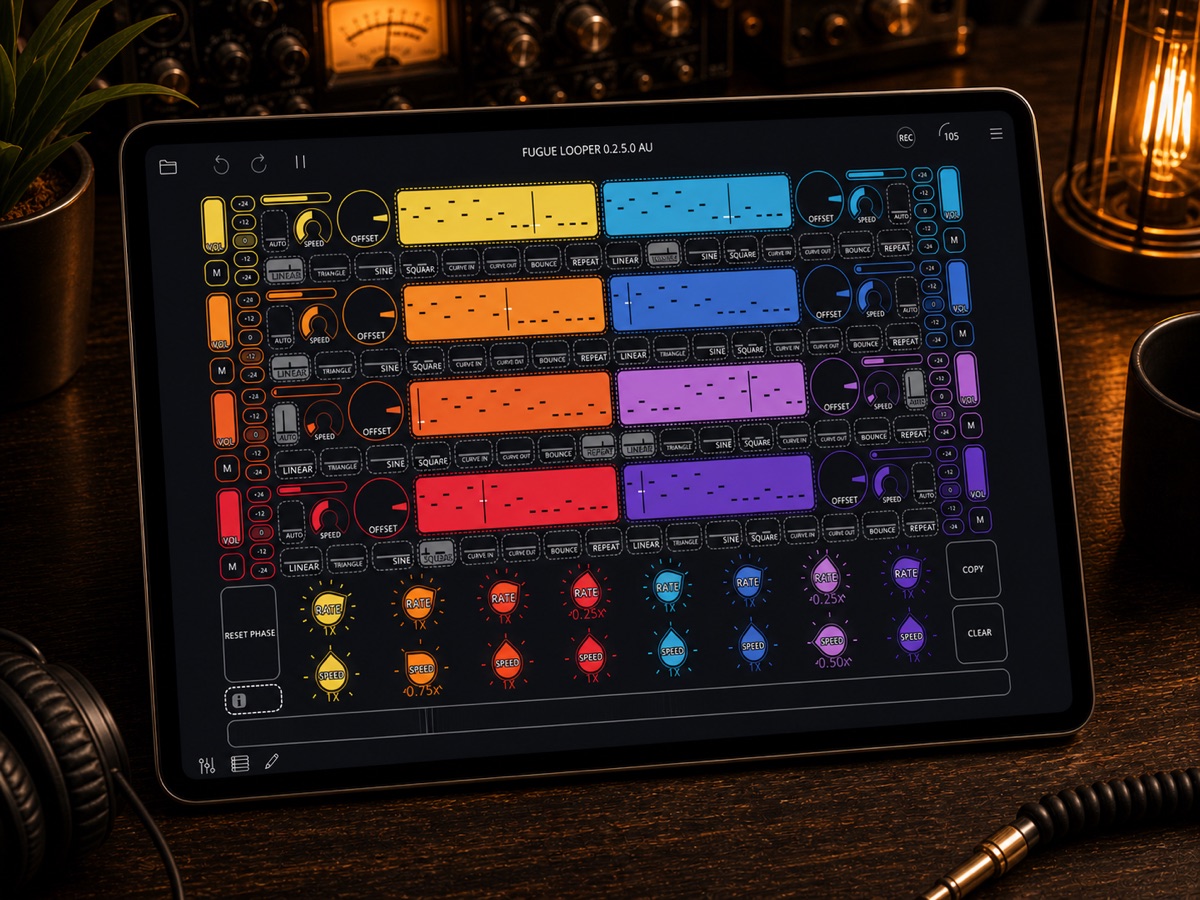
Loopy Pro gives people agency. A musician can use it as a loop station, then keep shaping it into a sampler, controller, sequencer, mixer, or hybrid stage instrument that fits their own hands.
The artist spotlight series shows that idea in practice: different musicians turning the same app into very different instruments. This conversation explains the design approach that makes that possible.
Michael talks about Kristóf building a Kaoss Pad-like setup inside Loopy Pro, and Tim, a beta tester, creating intricate step sequencer-like systems from the available pieces. Those examples reveal the product philosophy. Loopy Pro works best when it leaves room for musicians to surprise even the person who made it.
The future Michael describes is practical rather than grandiose: Mac, VST hosting and plugin behavior, eventually wider platforms if the tradeoffs make sense, more ways for touch surfaces and desktop rigs to work together, and perhaps deeper built-in effects when the time is right. Loopy Pro's custom rendering system, built from the ground up rather than leaning heavily on Apple's standard interface frameworks, makes that future more possible.
The same interview also shows why Loopy Pro has to be developed with care. Time is finite, the app's surface area is huge, and every new capability has to keep working for musicians who rely on it. Loopy Pro is deep because a small, highly connected group keeps turning real musical needs into carefully maintained software.
The community is why Loopy is good.
The artist spotlights show Loopy Pro in use. This conversation with its creator explains the design culture behind it: independent, responsive, technical, personal, and unusually shaped by the musicians who depend on it.
Loopy Pro comes from a developer who is reachable, invested, and visibly serious about not breaking people's work.
The action system, custom workspace, and flexible engine all come from the same idea: musicians should be able to build the rig that fits them.
Feature requests, beta testing, artist workflows, and support conversations are not side channels. They are part of how Loopy Pro is made.
The story sets up why desktop, plugin hosting, multi-device control, and broader platforms are natural next steps rather than sudden pivots.
Full Conversation
For a deeper dive, musician and Loopy Pro user Inby interviews Michael Tyson about the early App Store, Audiobus, the seven-year road to Loopy Pro, community-shaped design, reliability, AI, and what comes next.