iPad at the center
Replaces a larger hardware-centered looping setup with an iPad, Loopy Pro, an Akai APC40 MK2, and controller-driven performance.
Artist Spotlight
Dub FX shows how Loopy Pro can become the center of a serious touring rig: live looping, stems, plugins, routing, set lists, and controller-driven performance from iPad.
Quick Glance
A touring-grade iPad rig for live looping, stems, plugins, routing, set lists, and controller-driven performance.
iPad, Loopy Pro, APC40 MK2, Helix, Allen & Heath Qu-Pac, vocal mic, and routing for guests and stage monitoring.
A lighter touring system that can replace major hardware while still sounding polished on large stages.
Set lists, stems, AUv3 plugins, time stretching, routing, click, controller mapping, and timeline actions.
Watch The Interview
Performance Clip
Dub FX built his reputation by making the process visible: voice, beatbox, bass, harmony, effects, and loops stacked into a full performance in front of the audience. That background still matters, even as the rig around him has become much more capable.
The early version was direct and physical. Start with a beat. Add a bassline. Build the groove. Try songs at different tempos and in different keys. Stretch one idea until it becomes a whole moment. The machinery was part of the appeal: the crowd could see the music being made in real time.
“I use beatboxing as sound design but I’m a music producer. I’m a vocalist. I’m a songwriter.”
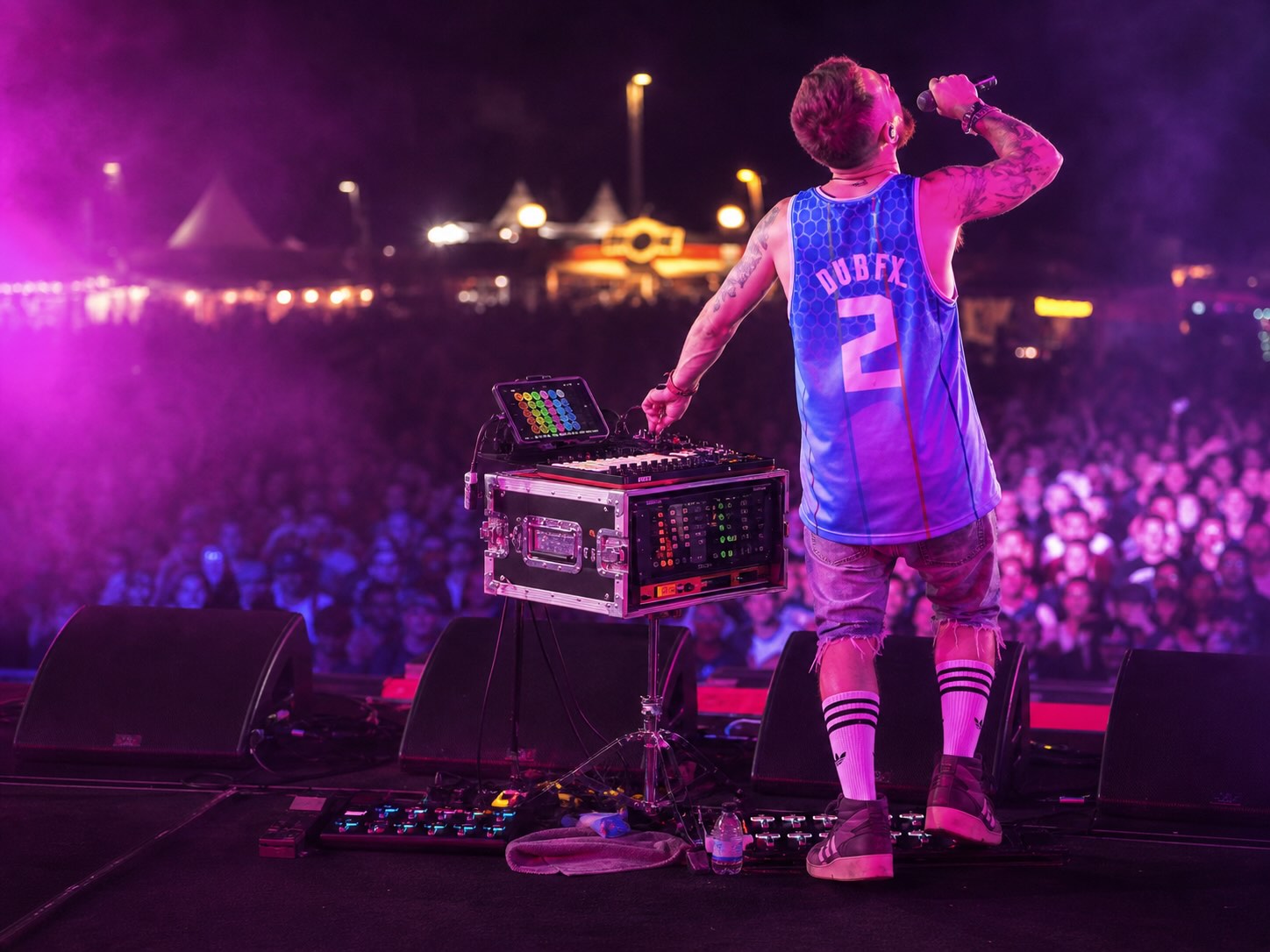
For years, Dub FX toured with a hardware-centered setup: loopers, effects pedals, drum machines, backing-track hardware, cables, mixers, and the usual touring sprawl that comes with keeping a live rig powerful enough for large rooms.
Moving to Loopy Pro let him pull a scattered hardware rig into one place. Live looping, prepared stems, tempo handling, set flow, controller mapping, plugin processing, sends, clicks, and routing could all live inside a single performance system.
That matters because his songs do not all need the same kind of live behavior. Some need old-school looping. Some need stems. Some need sections to jump around. Some need live vocal processing to stay locked to tempo. Loopy Pro lets each project behave the way the song needs to behave on stage.
“It’s so much more flexible.”
Dub FX’s current setup puts the iPad at the center of a serious connected rig: Loopy Pro, an Akai APC40 MK2, Line 6 Helix, Allen & Heath Qu-Pac, vocal mic, studio-quality AUv3 effect plugins hosted inside Loopy Pro, and guest inputs when he performs with other musicians.
The important part is that the system talks to itself. Loopy Pro can send tempo to the Helix so delays stay in time. Controller buttons can trigger patches or song behavior. Projects can be organized into set lists. Stems, live loops, plugin chains, sends, effects, and click tracks can all go where they need to go.
The iPad becomes the brain of the show. The rig stays portable, while still carrying the sound design, plugin chains, routing, and control depth he needs on stage.
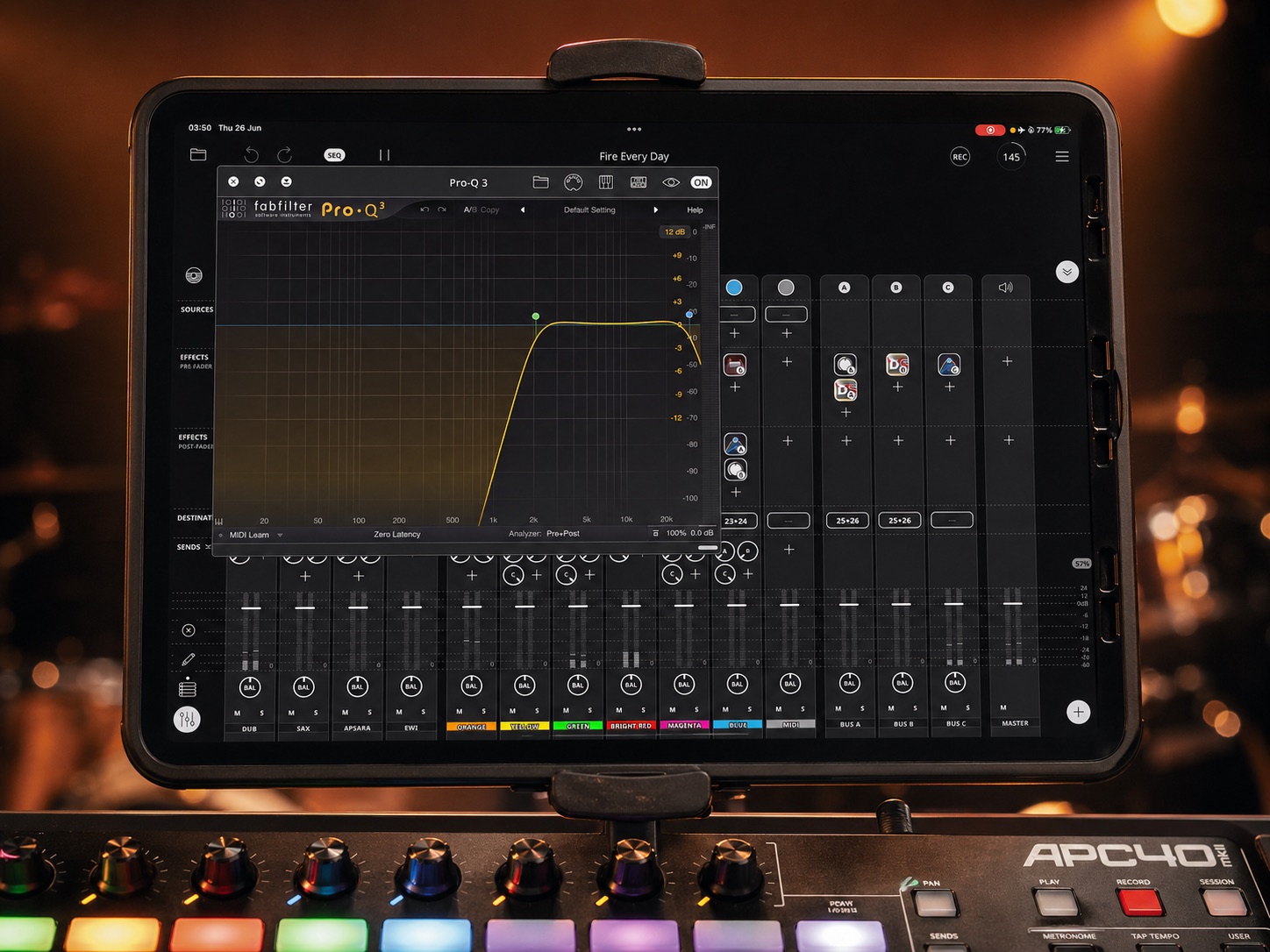
Dub FX talks about looping through the lens of production. The goal is a live show that already sounds shaped, detailed, and record-ready. He can import stems from studio productions, adapt tempos for the stage, shape individual elements with studio-quality EQ, reverb, delay, saturation, and other AUv3 plugins hosted in Loopy Pro, and bring production-style processing into the live performance.
His template reflects that. Drums, percussion, bass, harmony, one-shots, slicers, sends, filters, reverbs, delays, and saturation can all be mapped into a playable surface. He can build a track with foot control, shape it with faders, or move through song sections using timeline actions.
“What I love about Loopy Pro is how modular it is”
A Dub FX show now blends live looping and prepared material. Prepared stems give the large-stage show the weight people expect, while Loopy Pro keeps the material playable: parts can be turned down, sections can be jumped, effects can be performed, loops can be built on top, and improvised moments can still happen.
Set lists are part of that reliability. He can keep one project per song, move through the show cleanly, and handle transitions live. Projects can blend into each other, letting effect tails, reverbs, delays, and atmosphere from one track carry over into the next instead of being chopped off.
That flexibility also matters when touring goes wrong. In the interview, Dub FX describes running a stripped-down show when gear did not arrive. For a professional live performer, resilience like that is what makes a rig feel trustworthy on the road.
“I can’t live without Loopy Pro.”
When asked about favorite Loopy Pro features, Dub FX ranges across the whole rig: set lists, individual recording, time stretching, tempo rounding, auto loop detection, click routing, controller flexibility, and modularity.
That range says a lot. For Dub FX, Loopy Pro becomes the system around the loops: the sound source, the router, the controller target, the plugin host, the set-list manager, and the place where prepared and spontaneous performance meet, with sound quality that can stand up in a serious live show.
The interview gets concrete about how Loopy Pro sits inside a professional touring rig.
Replaces a larger hardware-centered looping setup with an iPad, Loopy Pro, an Akai APC40 MK2, and controller-driven performance.
Hosts AUv3 effects and production-style processing inside Loopy Pro to bring studio-quality sound into the live rig.
Uses set lists, time stretching, tempo tools, timeline actions, and project transitions with effect-tail overlap to keep the show structured, fluid, and playable.
Routes drums, bass, instruments, backing vocals, sends, click, guest inputs, and recorded elements separately for stage and production use.